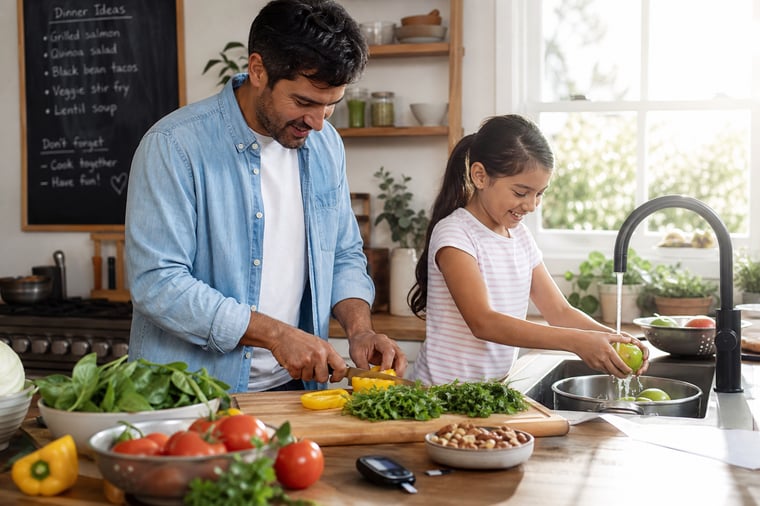
Children are not born wanting fries over carrots. That preference develops over time, shaped by what's available, what's modeled, and what's easy to grab on a busy weeknight. A recent guide from HelpGuide.org on healthy food for kids makes a useful point: taste preferences in children are conditioned, which means they can also be reconditioned. For families managing a chronic condition like diabetes or hypertension, that distinction matters. The food in the house isn't just about taste — it's part of how the whole household manages daily health.
HelpGuide's guidance centers on a few practical shifts: cooking more meals at home, keeping fruit and vegetables visible and ready to eat, and treating family meals as a chance to model behavior rather than lecture about it. None of this requires a nutrition degree. It requires access — to produce, to time, and to a kitchen stocked with something better than what's fastest.
Access shapes habits before willpower does
A household deciding between a drive-through dinner and a home-cooked one is often deciding based on time and what's already in the refrigerator, not health knowledge. Project FoodBox's 2025 Member Outcomes Survey, based on responses from more than 3,000 enrolled members, found an average of 1.17 fewer fast-food meals per week among households receiving regular produce deliveries. That's a modest number on its own, but it reflects something families managing kids' eating habits already sense: when vegetables and fruit are already in the house, the home-cooked option gets easier to choose.
This is the same mechanism HelpGuide points to when it recommends keeping washed, cut produce on hand for snacking, or getting kids involved in picking out groceries. The behavior change isn't about discipline. It's about removing friction between a family and the choice that supports their child's health, whether that child is managing a diagnosed condition or a parent is simply trying to keep one from developing.
A box built for the whole household's routine
Project FoodBox delivers free, medically tailored produce — 15 to 18 pounds per delivery in California, up to 25 pounds of mixed groceries in New York — to Medi-Cal and Medicaid members managing conditions including diabetes, hypertension, and cardiac disease. Diabetes-specific boxes are built by registered dietitians with the same principle HelpGuide applies to kids' diets: complex carbohydrates, whole foods, and less reliance on the sugar hidden in packaged snacks and drinks. For a parent managing their own blood sugar while also trying to feed children well, that overlap in guidance simplifies the mental load of grocery planning rather than adding to it.
Regular produce in the kitchen, more meals cooked at home, less dependence on fast food — are the same habits that shape what kids grow up eating. A family's food environment doesn't separate cleanly by age.
Share this article with another parent, caregiver, or clinician who's helping a family build better eating habits at home.