

Fresh produce rarely spoils because you bought the wrong thing. More often, it is in the wrong place, carrying too much moisture, or ripening beside food that is sensitive to ethylene gas. How to Keep Fruits and Vegetables Fresh Longer comes down to matching each item with the right temperature, moisture level, airflow, and storage neighbors.
A good routine is simple: sort produce when it arrives, refrigerate anything perishable, keep cut produce covered and cold, and move ripe food where you will see it first. These small decisions can help you use more of what you already have—especially when a food box needs to last until your next delivery.
Start with a five-minute produce reset
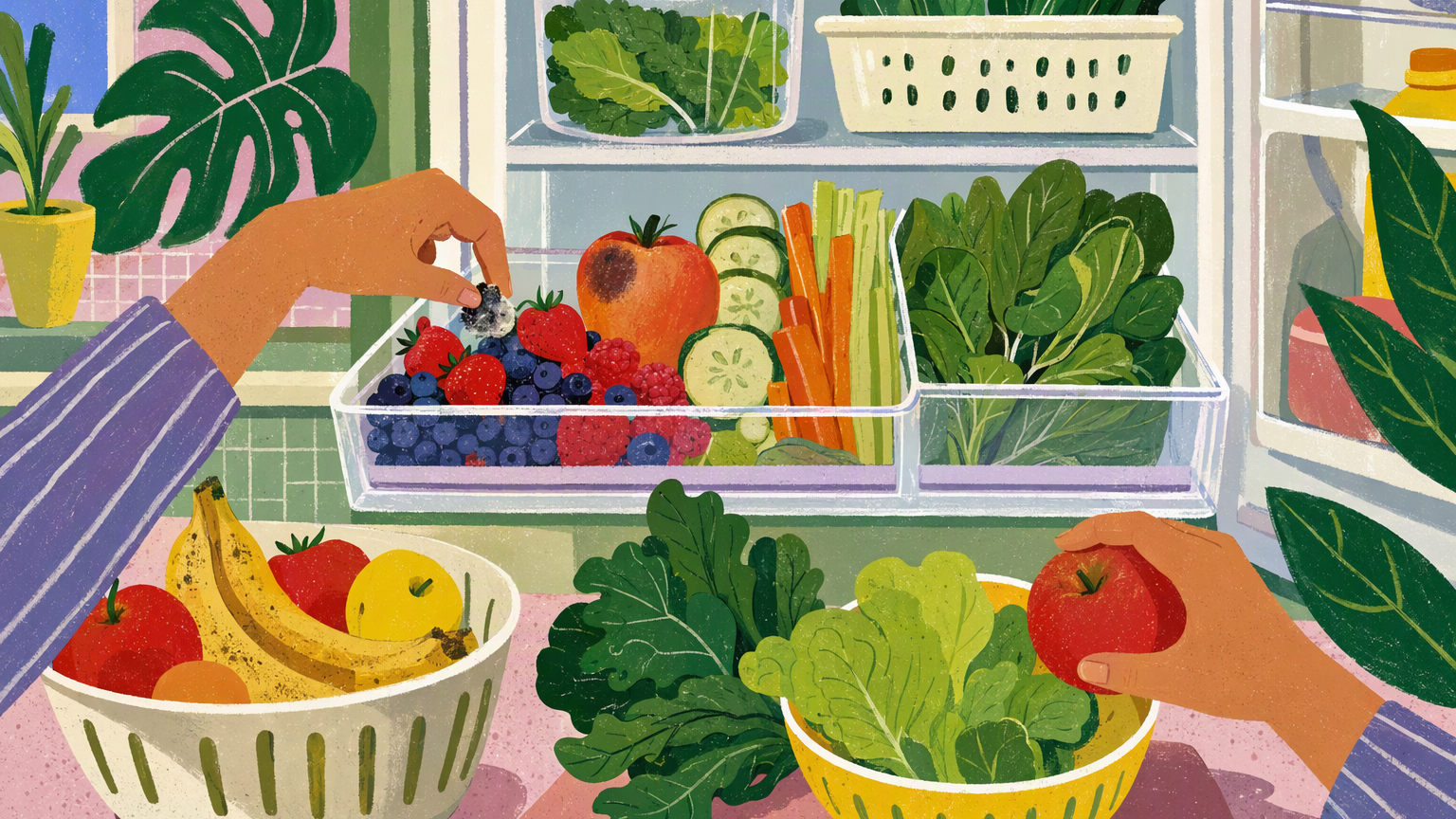
When groceries come home, resist the urge to put everything away as quickly as possible. First, look for bruised, leaking, moldy, or already-ripe pieces. Separate anything that needs attention today from produce that can wait.
We like to create an “eat first” space in the refrigerator. A small, visible container works well for berries that are ready to eat, bruised apples, cut vegetables, and greens you opened yesterday. Seeing these foods changes the question from “What should I cook?” to “What needs using now?”
Then sort the rest by storage need. Keep counter-ripening fruit away from delicate greens, and do not treat a fruit bowl as a storage plan for every kind of produce. Apples, bananas, avocados, pears, and tomatoes release ethylene, a natural gas that can speed ripening and aging in nearby sensitive produce. The USDA recommends keeping ethylene-producing fruit as far as possible from ethylene-sensitive fruits and vegetables, preferably in separate refrigerator drawers.
Where should fresh produce go?
The best storage place depends on whether the food needs to ripen, stay dry, or stay cold. The table below gives you a practical starting point; ripeness and the conditions in your kitchen can change the timing.
| Produce | Best starting place | Helpful habit |
|---|---|---|
| Bananas | Counter while green | Move very ripe bananas to the freezer for smoothies or baking |
| Avocados and pears | Counter until ripe | Refrigerate once ripe if you will not eat them soon |
| Tomatoes | Counter, away from direct sun | Refrigerate ripe tomatoes if you need to slow spoilage |
| Berries | Refrigerator | Keep dry and wash just before eating when possible |
| Leafy greens | Refrigerator | Store dry with a clean, dry towel in a bag or container |
| Carrots and broccoli | Refrigerator | Protect them from drying and keep them away from ethylene producers |
| Apples | Refrigerator for longer storage | Keep them apart from sensitive vegetables |
| Citrus | Counter for near-term use or refrigerator | Loose or ventilated storage helps prevent trapped moisture |
| Potatoes and onions | Cool, dark, dry, ventilated space | Store them separately when possible |
| Fresh herbs | Refrigerator or freezer | Use a method suited to the herb and freeze sound extras |
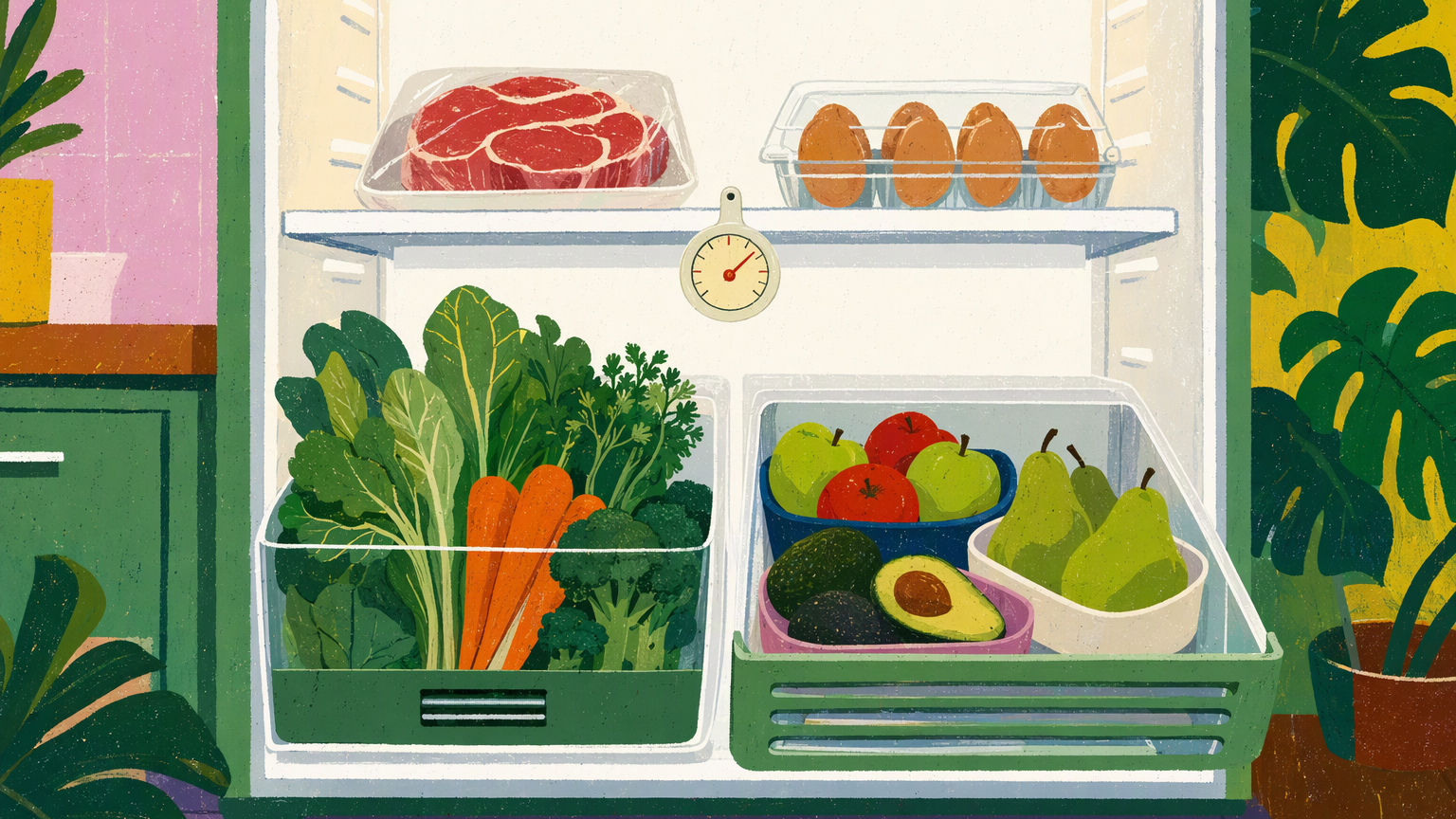
Perishable produce belongs in a clean refrigerator at 40°F (4°C) or below, according to the FDA. That includes foods such as strawberries, lettuce, herbs, and mushrooms. Keep the refrigerator clean and dry, and avoid packing produce so tightly that air cannot move around it.
Some produce needs the counter first. Firm avocados, pears, stone fruit, tomatoes, and green bananas generally need time to ripen before refrigeration becomes useful. Once an avocado or pear is ready, cold storage can help you buy a little more time.
Potatoes, onions, garlic, and winter squash are better suited to a cool, dark, dry place than a damp refrigerator drawer. Use a basket or bag that allows ventilation, and keep potatoes and onions apart when you can. Separate storage makes moisture and spoilage easier to spot.
How can you use the refrigerator without making produce spoil faster?
Your refrigerator can extend the life of delicate produce, but only when moisture is under control. A crisper drawer that is too dry can leave greens limp; one filled with condensation can leave berries or herbs moldy.
Store leafy greens loosely in a clean bag or container with a dry towel. If the towel becomes damp, replace it. Keep carrots covered so they do not lose moisture, but do not let them sit in pooled water. Berries should remain dry, and any damaged fruit should be removed promptly.
Use separate drawers when your refrigerator allows it. Keep ethylene-producing fruit away from greens, broccoli, carrots, cucumbers, and other produce that can deteriorate more quickly nearby. If you have only one drawer, separate containers can still reduce contact and keep one item from pressing against another.
Washing is another place where good intentions can shorten storage life. The USDA recommends washing produce under continuous running water before serving or cutting; it also advises against soaking produce or keeping it in standing water. For many delicate items, washing immediately before eating is more practical because extra moisture can encourage deterioration.
If you wash berries or greens ahead of time, dry them thoroughly. Spread berries on a clean towel until their surfaces are dry. Spin greens or pat them dry, then store them with a clean absorbent towel. Do not use soap, bleach, or household cleaners on produce.
What should you do with cut, ripe, and extra produce?
Once produce is cut, peeled, or prepared, it needs more protection than whole produce. Put it in a clean, covered container and refrigerate it promptly at 40°F or below. This applies to cut fruit, chopped vegetables, peeled items, and leftovers containing fresh produce.
A simple order of operations helps when the refrigerator is full:
- Cover and chill cut or peeled produce first. It is the most time-sensitive food in the kitchen.
- Move ripe fruit into the eat-first container. Keep it visible rather than burying it behind new groceries.
- Cook delicate vegetables soon. Wilted greens, soft carrots, and extra herbs can become soup, sauce, or a stir-fry.
- Freeze sound extras before they begin to decay. Portion them for the meals you actually make.
Freezing is especially useful for ripe bananas, berries, chopped fruit, and herbs. Cut fruit into useful portions and freeze it in a single layer before transferring it to a freezer-safe container. The texture may be softer after thawing, so frozen produce is often best in smoothies, oatmeal, sauces, baking, soups, and cooked dishes.
Many vegetables benefit from blanching before freezing. A brief boil or steam treatment slows enzyme activity that can affect color, flavor, and texture during frozen storage. Follow a tested recipe for the vegetable and blanching time rather than guessing, because preparation varies by produce type.
Fresh herbs can be frozen in recipe-sized portions. Label containers with the contents and date so the freezer becomes a useful backup instead of a place where food disappears.
How do containers, bags, and ethylene affect freshness?
A glass container is not automatically better than a plastic bag, and an airtight seal is not automatically better than ventilation. The right choice depends on what you are trying to control: moisture loss, condensation, airflow, or visibility.
A covered, food-safe container works well for cut produce. A bag or container with a dry towel can help leafy greens and carrots hold moisture without sitting in water. Potatoes, onions, and some whole fruits need more airflow, so an airtight container may trap the dampness that causes problems.
Clear containers have one quiet advantage: you can see what needs using. A storage method that keeps food visible may prevent more waste than an expensive organizer hidden at the back of a drawer.
Use ethylene intentionally. If you want a firm avocado or pear to ripen, keep it near a ripe banana for a short time and check it daily. If you want produce to last, separate those fruits from greens, broccoli, carrots, and cucumbers. The goal is not to eliminate ethylene; it is to avoid exposing sensitive food to more of it than necessary.
When should you use, trim, or discard produce?
Not every wrinkle means food is unsafe. Mild wilting, shriveling, a dry end, or a small bruise can be a quality change rather than a reason to discard the whole item. Use sound parts promptly in cooked dishes, and move food with a short window into the eat-first container.
Mold requires more caution. Soft fruits and vegetables should be discarded when moldy because contamination may extend below the surface. For firm produce, USDA guidance allows cutting away at least 1 inch around and below a small moldy area, while keeping the knife away from the mold; when the item is extensively soft, leaking, slimy, or foul-smelling, discard it instead.
Do not taste food to decide whether questionable produce is safe. When in doubt—particularly when serving young children, older adults, pregnant people, or anyone with a weakened immune system—the safer choice is to throw it away.
The next time produce comes home, spend five minutes sorting it before it reaches the refrigerator. Keep ripe food visible, control moisture, separate ethylene producers, and freeze sound extras. That routine is more useful than any single storage gadget—and it gives the food you already have a better chance of making it to the plate.