

TL;DR
The Forbes Council article, written by Guy Yehiav, Forbes Councils Member, explores technology’s role in the Food is Medicine movement and makes an important distinction: software is the support system, not the treatment itself. The most valuable tools connect screening, referrals, food selection, delivery, follow-up, and evaluation so people do not fall through gaps between healthcare and community services.
A strong program does not force every member into an app. It offers phone, text, paper, interpreter, caregiver, and staff-assisted options. It also limits data collection, gives qualified professionals a role in complex nutrition decisions, and measures whether food was usable—not merely whether a package received a delivery scan.
What is the food is medicine movement?
The food is medicine movement treats access to suitable food as part of health support. Programs may provide meals, groceries, produce benefits, or nutrition counseling alongside medical treatment, particularly when food access or diet affects a person’s ability to manage a condition.
The Connecticut General Assembly’s food-as-medicine work-group materials describe these interventions as services that tailor food and support to nutrition-related health needs. That approach commonly involves screening, referral, community organizations, and a funding model—not just a food shipment.
Which services count as food is medicine programs?
Food is medicine programs can include several service types. The right choice depends on clinical need, household circumstances, cooking ability, and the benefit available.
| Service | What the member receives | Main practical consideration |
|---|---|---|
| Medically tailored meals | Prepared meals designed around health needs | Little cooking, storage, or planning may be required |
| Medically tailored food boxes | Groceries selected for a nutrition goal | The household needs suitable storage and preparation capacity |
| Produce prescriptions | A benefit or referral for fruits and vegetables | Redemption must be convenient and accessible |
| Medically supportive groceries | A broader selection of health-supporting foods | Personal preference and cultural fit affect use |
| Nutrition counseling | Guidance from a qualified nutrition professional | Advice should fit the person’s health and living situation |
These services are not interchangeable with emergency food assistance. Emergency food programs address immediate hunger; a food is medicine intervention adds a health-related goal and may be linked to clinical care.
How can technology make food is medicine programs easier to use?
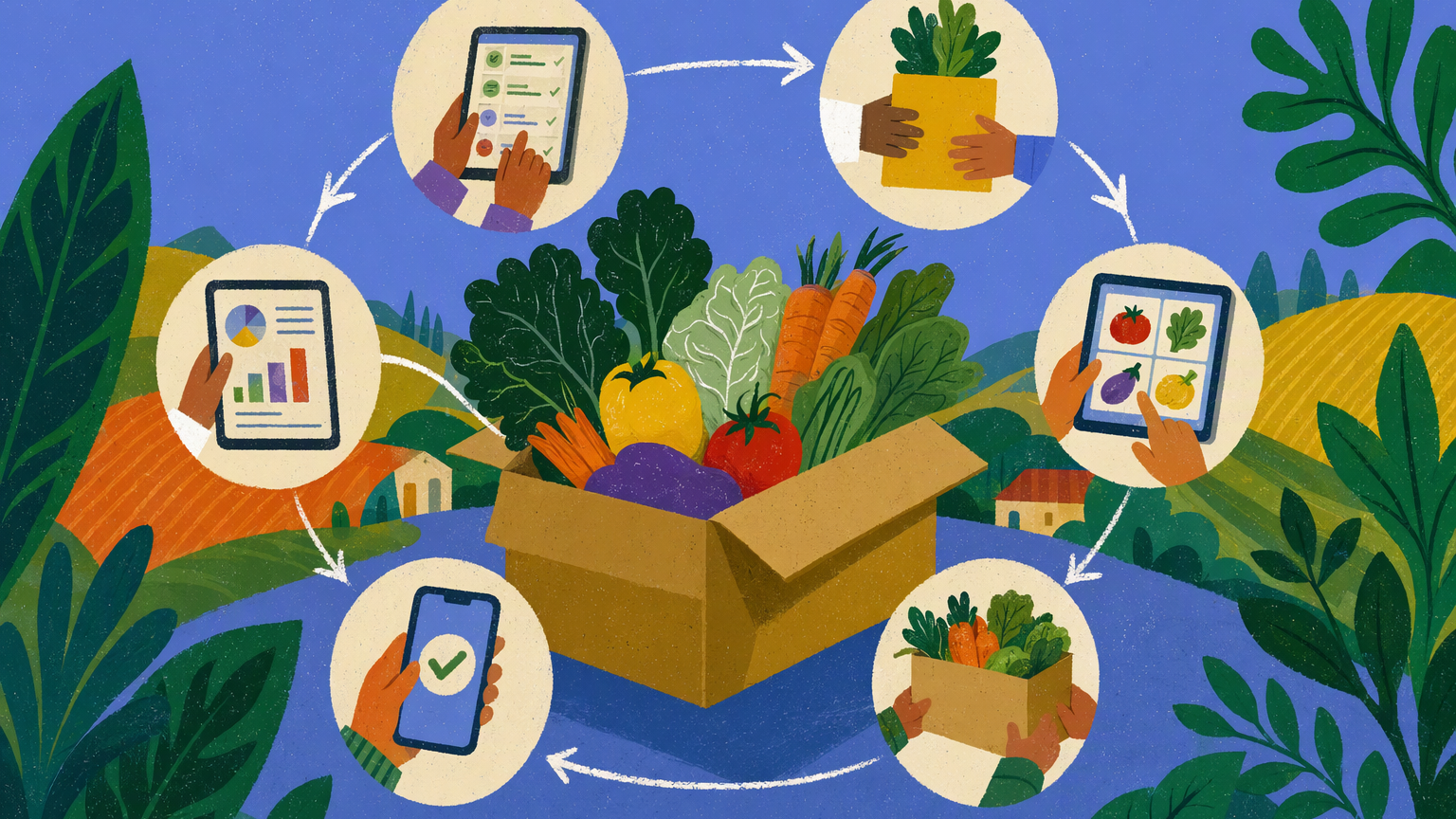 Technology can reduce repeated paperwork, connect healthcare referrals with community delivery, and show staff what happened after a referral. It is most useful when it removes a specific barrier: an incomplete application, a missed delivery, an unanswered referral, or a care team that cannot see whether support began.
A practical workflow can follow this sequence:
- Screen for need: Identify food insecurity or a nutrition-related concern during care or community contact.
- Confirm eligibility: Check the available benefit, program rules, location, and service period.
- Collect useful preferences: Record allergies, dietary needs, language, household size, equipment, and communication choice.
- Select the intervention: Match meals, groceries, produce, or counseling to the person’s needs.
- Coordinate delivery: Validate the address, preferred time, access instructions, and any temperature or storage concern.
- Confirm receipt and usability: Ask whether the food arrived, could be stored, and was suitable to eat.
- Resolve exceptions: Route failed contact, substitutions, safety concerns, or changing needs to a person.
- Review outcomes: Compare service activity with member experience and agreed health measures.
Prefilled forms and shared status updates can make this process simpler. However, automation should not close a case just because a document is missing or an address needs correction. Staff need an exception queue and the authority to intervene.
Why is an app-only approach risky?
An app-only model can exclude people with limited internet access, changing phone numbers, disabilities, limited English proficiency, or low confidence with digital tools. It also adds another password to a care journey that may already involve several portals.
A better approach is channel choice. A member might enroll by phone, reply to a text, use a paper form, work with a caregiver, or receive help from a navigator. The technology should support the preferred route rather than make the route a condition of eligibility.
How should personalized nutrition technology tailor food?
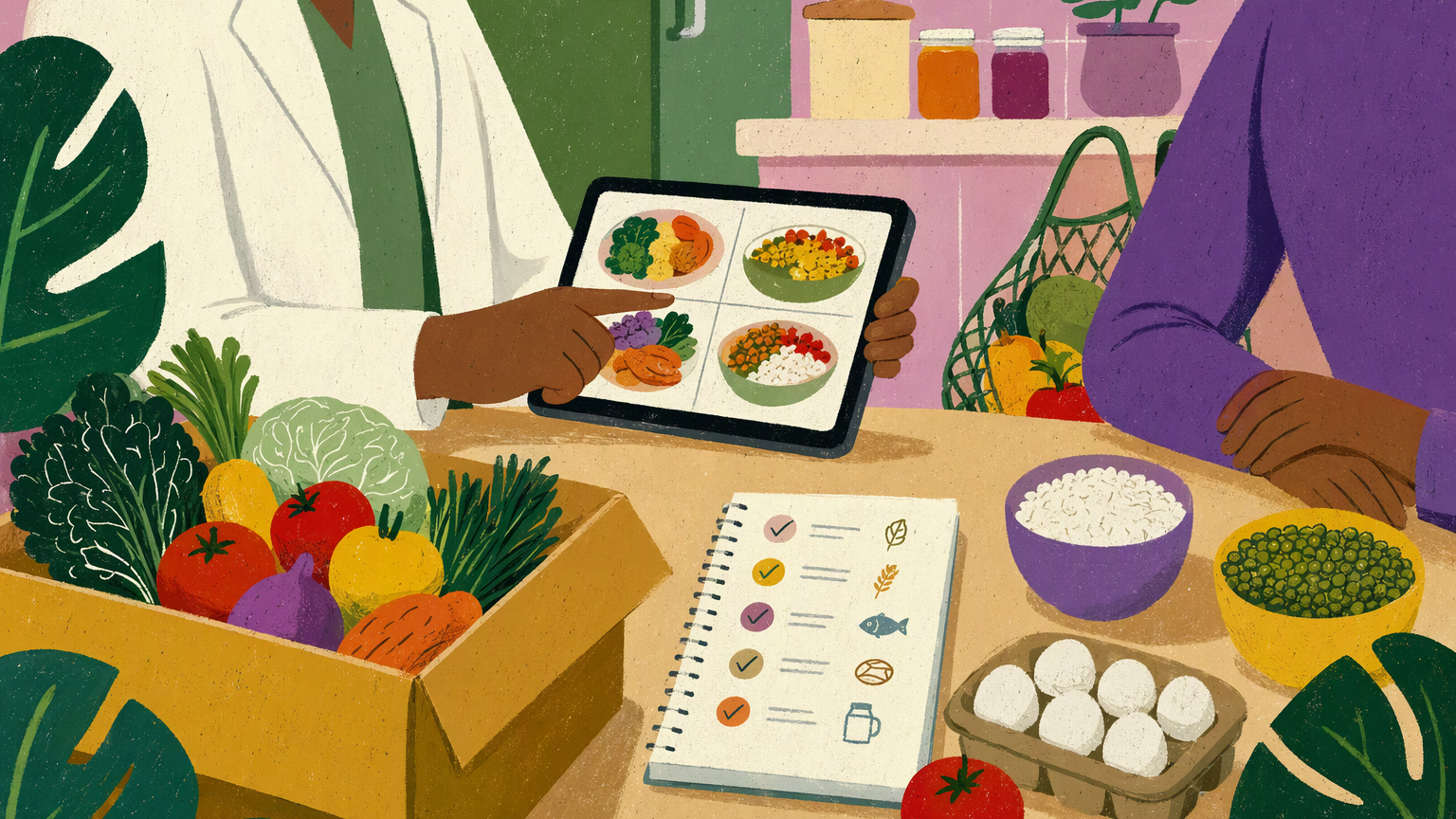 Personalized nutrition technology should combine clinical information with the details that determine whether food can actually be used. A diagnosis code alone cannot show whether a person has a working refrigerator, can lift a box, eats culturally familiar foods, or has enough time to cook.
Useful inputs may include:
- Health conditions and the nutrition goal.
- Allergies, intolerances, preferences, and religious restrictions.
- Household size and whether others will share the food.
- Kitchen equipment, refrigerator space, and cooking fuel.
- Chewing, swallowing, mobility, and preparation limitations.
- Preferred language, communication channel, and caregiver involvement.
The system can organize this information and suggest appropriate choices. A qualified professional should review complicated situations, including multiple conditions, serious allergies, medication-related concerns, or cases requiring medical nutrition therapy. An algorithm can support a decision; it should not quietly make a clinical decision without review.
How do medically tailored meals compare with food boxes?
Medically tailored meals are prepared in advance and may suit someone who cannot cook safely or is returning home after a hospital stay. Food boxes provide more control over ingredients and household meals, but they require storage, preparation time, kitchen access, and physical capacity.
The choice is therefore operational as well as nutritional. A technically accurate box is still a poor intervention if the member cannot open, store, prepare, or share its contents.
How can EMR referrals become a closed loop?
An electronic medical record referral becomes closed loop when the program records what happened after the clinician pressed “send.” A referral alone does not show that the person was eligible, reached, enrolled, delivered to, or helped.
At minimum, the workflow should distinguish these states:
| Status | What it tells the care team |
|---|---|
| Referral sent | A request was created, not that anyone received it |
| Referral accepted | The receiving organization has the request |
| Contact attempted | Outreach has started, with the channel recorded |
| Enrolled | The member agreed and meets program requirements |
| Service scheduled | Food or counseling has been arranged |
| Delivered or provided | The service was marked complete operationally |
| Received and usable | The member confirms meaningful access |
| Follow-up needed | A person must address a barrier or change |
Care teams usually need the member’s enrollment status, service type, dates, delivery exception, major barrier, and agreed outcome. They do not need every packing or routing detail. Information should be visible because it supports an action: follow up, change the food, renew the benefit, or resolve a failed delivery.
What should delivery tracking measure?
Delivery technology should record more than a carrier scan. It should support address validation, access instructions, delivery windows, substitution notices, and escalation when food is late, damaged, inaccessible, or unsafe to store.
A package can be labelled “delivered” while sitting at the wrong building or somewhere the member cannot reach. For perishable food, the program may also need a process for temperature and spoilage concerns.
Delivery completion is an operational measure, not a health outcome. Programs should ask whether the food arrived, was safe, fit the household, and could be eaten by the intended person.
How should food is medicine programs measure impact?
Programs should measure the full path from access to health rather than treating delivery volume as proof of success. A useful evaluation ladder moves from reach and enrollment to service use, member experience, clinical indicators, healthcare use, and cost.
Project FoodBox shows how this framework can apply to a real food is medicine model. Its program uses medically tailored produce boxes developed with local farmers and registered dietitians, so evaluation should track more than whether a box was delivered: it should examine access, produce use, dietary fit, relevant health measures, and healthcare utilization. Project FoodBox’s published case-study materials describe the intervention, but they do not establish a universal clinical or cost result; programs should report their own population, timeframe, comparison method, and findings.
| Measurement layer | Example questions |
|---|---|
| Reach | Who was offered the service, and who could not access it? |
| Enrollment | How many eligible people completed enrollment? |
| Operations | Were food and counseling provided as planned? |
| Usability | Could members store, prepare, and eat the food? |
| Experience | Did the service reduce food-related stress or fit preferences? |
| Clinical | Did relevant measures change during the agreed period? |
| Utilization | Did emergency visits, admissions, or readmissions change? |
| Cost and equity | Did results differ by group, location, or access barrier? |
Possible clinical measures include A1C, blood pressure, medication adherence, and patient-reported health, when they fit the intervention and care plan. Health plans may also examine healthcare use and total cost, but claims require context. Results can vary with population, service duration, benefit design, comparison method, and study design.
Before-and-after stories can illustrate a member’s experience, but they cannot establish that the food program alone caused a clinical change. A baseline or comparison group gives an evaluation a stronger foundation.
How can programs protect privacy without blocking care?
A food is medicine program should collect only the information needed for eligibility, safe tailoring, delivery, care coordination, and the evaluation the member has agreed to support. Data collection should have a job; information should not be gathered simply because a system can store it.
HHS explains that HIPAA obligations depend on an organization’s role. Covered health plans, providers, and clearinghouses have different responsibilities from a community organization that is not a covered entity. A participating food organization may have additional obligations if it acts as a business associate, so the arrangement should be reviewed rather than assumed.
Programs should define who can view each field, use secure transfer, set retention rules, control vendor access, and maintain an incident-response process. Members should also be told what is collected, why it is used, who receives it, and how they can request access or correction where applicable.
Consent for receiving an eligible service should remain separate from optional research, marketing, or unrelated data sharing. A member should not lose food support merely because they decline an optional use of their information.
What should health plans and providers fund?
Funding only the software leaves the core service unfinished. A workable budget may need to cover food, nutrition expertise, packing, delivery, enrollment, navigation, interpretation, accessibility, electronic record integration, evaluation, and human follow-up.
Before scaling a program, leaders should map the member journey and answer five questions:
- Which population is eligible, and what need triggers entry?
- Who owns each step from referral through renewal?
- What can members choose about food and communication?
- Which outcomes matter to members, clinicians, and the payer?
- What happens when automation, delivery, or eligibility checks fail?
The best technology is often invisible to the member. It gives staff enough information to act, gives clinicians a reliable view of the care plan, and gives the household a practical way to receive food that fits daily life.