Waste Less Produce: Storage Tips and When to Juice It
Most people know they should eat more fruits and vegetables, yet a recent piece from Have A Plant, citing the Produce for Better Health Foundation's State of the Plate research, found that only about 10 percent of Americans meet the recommended daily intake. Cost is part of the reason, but so is waste: produce that arrives with good intentions and then spoils before it gets used. For a household receiving a medically tailored produce box, closing that gap between delivery and dinner plate is where the clinical value of the box is either realized or lost.
Storage Habits That Buy You Time
Fresh herbs and vegetable trimmings are often the first things to go bad, and also the easiest to save. Chopped herbs frozen into ice cube trays with a little olive oil or broth hold their flavor for months and drop straight into a hot pan when a recipe needs it.
Vegetable peels, stems, and tops can go into a freezer bag instead of the trash, then simmer into a soup stock once the bag fills up. Timing matters too: produce that gets washed and left damp in the refrigerator ripens faster and molds sooner, so it's better to rinse fruits and vegetables only when they're about to be eaten. Switching from opaque bins to clear, sealed containers also helps, since produce you can see is produce you remember to use.
When Fruit Is About to Turn, Juicing Is a Reasonable Option
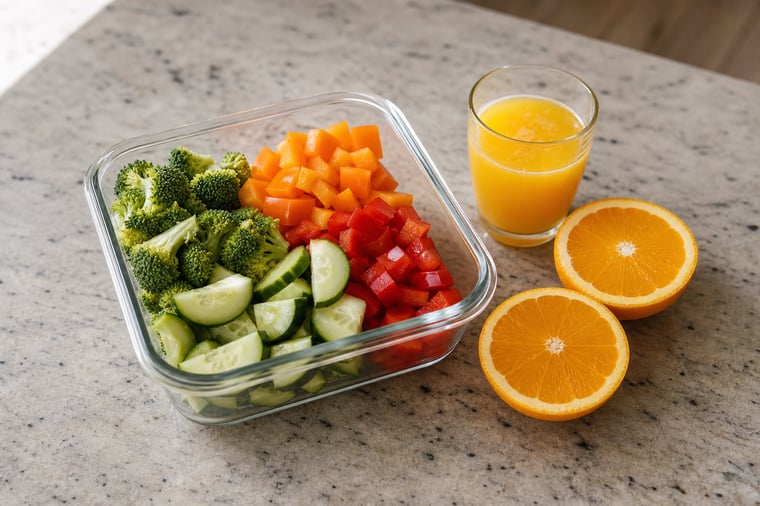
Even with good storage habits, some fruit will start to soften before it gets eaten, and oranges are a common example in a produce box. Have A Plant's nutrition profile on 100% orange juice notes that an 8-ounce glass made from fresh oranges provides no added sugar, no sodium, and counts toward the daily fruit recommendation under the Dietary Guidelines for Americans, which caps juice at no more than half of total daily fruit servings. Squeezing oranges that are past their prime into fresh juice is one way to use them before they're wasted, rather than a habit to build a diet around.
For members managing diabetes, whole fruit is still the better default, since juice lacks the fiber that slows sugar absorption, and any juice should be counted against the day's carbohydrate total rather than treated as a free extra.